HOME ZpH Deficiencies ZpH Test ZpH Diet Evaluation Healthtips eZINE ZpH Online MORE INFO PMS WEIGHT LOSS ACCESS NOW 
~YOUR pH Balance TEST ~ Brought to the net in 1996 based on the natural healing work, books and pH discoveries of Dr. Carey Reams and Dr. A. F. Beddoe; the
Are you too acid~in pH balance~or too alkaline?
With some pH testing tape, and a simple pH test* of your saliva, you can find out just how close to being in pH balance you are.Your pH balance RESULTS and RECOMMENDATIONS BELOW, combined with the Diet, and Deficiencies Questionnaires on other web pages,
Guiding you to tbe foods, diet, vitamins or minerals best for you based on YOUR pH balance, deficiencies and diet balance results.
Which YOU can do with some pH tape, and the pH Balance, Deficiencies and Diet Questionnaires at this SITE.
With further advice regarding your pH balance results by emailing:
ZpHdoc@gmail.com
Getting yourself back to pH balance where true health is found!

nutritional work and publications of Dr. Bernard Jensen, Paul Bragg and Dr. N. W. Walker; and the author of this website
Dr. Michael Jonas Kahn Ph.D. Nutritional Science, along with his 35 years of experience (including retreats,
medical clinics and health spa's) using the above to help people get answers to their own
pH balanced health, dietary, vitamin or mineral deficiency decisions...*HOW TO DO THE pH TEST*
FIRST:
The pH TEST of the SALIVA using simple pH test tape should be done around 2 p.m. (mean time for pH based on normal waking and sleeping hours---adjusted accordingly if different); having eaten at least ONE MEAL that day, but NO FOOD OR BEVERAGES ONE HOUR BEFORE testing time---water being the exception, but no sooner then 15 minutes prior to the test.SECOND:
The pH test needs to be done on TWO SEPARATE DAYS in order to establish validity of the pH finding. If it is NOT CONSISTENT, then the test will need to be done on a third or fourth day. If still not found to be stable, this also has meaning and you should refer to the UNSTABLE pH RANGE recommendations.THIRD:
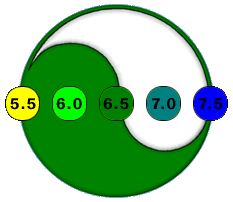
To do the pH test with pH tape take about a 1 inch piece of pH test tape and dip directly into a cup with some of your saliva for 5 seconds, remove and compare the color the tape takes (after about a minute) with the pH test color chart to find out your pH balance reading.NOTE:
All calcium, vitamin C and D supplements need to be DISCONTINUED 1 to 2 DAYS PRIOR TO THE TEST, so as not to influence the outcome of the pH READING, as these have the biggest influence on pH balance. Medications you are taking involving controlling acidity would automatically indicate that you are already too acidic, and thus following the pH dietary directions regarding an acidic pH of 6.0 or less would be indicated.~YOUR pH RESULTS~
A body in balance will have a SALIVA pH of 6.4 (based on the pH scale of 0-14, 7.0 being neutral).The SALIVA pH acidic enough to break down ones foods (as opposed to the alkaline blood pH of 7.4 when your in balance).
Thus, if your SALIVA pH is below 6.4 it has become too strong, and if your SALIVA pH is higher then 6.4 then it is becoming too weak.
Your SALIVA pH directly related to mineral/vitamin deficiencies (particularly calcium, vitamin C, D) and foods to focus on.
Getting back to pH balance the KEY to long term health that can only come from eating in balance!
The pH balance, Deficiencies, Diet Evaluation giving you those nutritional directions !!
~RECOMMENDATIONS~
Balanced pH Range 6.3-6.5 Those who find themselves between 6.3 and 6.5 may be showing a good, strong, balanced body chemistry, which should be able to assimilate most of the nutrients from their foods. A check of the Deficiencies Questionnaire and a test of your URINE pH (which should also be between 6.3-6.5) would validate this finding. As anyone in balance will be suffering no more then one or two symptoms from the deficiencies questionnaire, and have a URINE pH reading which is also in the proper pH Balanced Range of 6.3 to 6.5.If your URINE pH is not in this range, then follow the instructions here based on your URINE pH findings applied to the range you do find it in, until it too is in the pH Balanced Range of between 6.3-6.5. The URINE sample taken in a cup AFTER THE FIRST FEW SECONDS of voiding (to avoid the high salts initially expelled in urine, which have an acidic or lowering effect on pH readings).
For those whose pH's are both in the pH Balanced Range a high fibre, moderate protein and low fat diet would be best, with low fat dairy products for calcium supplementation to keep your body chemistry in pH balance. Concentrate on the following foods to stay in balance: brown rice, oats, corn and rice cereals, beans, lentils, carrots, green leafy vegetables of all kinds, tomatoes, peas, broccoli, bananas, oranges, apples, pears, lemons, parsley, garlic, fish, chicken, turkey, meat and low fat dairy (especially yogurt, cottage cheese, cream cheese and 1% low fat milk. All very good sources of calcium, if you are not dairy allergic or intolerant).
* Also potato peeling soup, using the outside 1/4 of the potato, with celery, carrots and parsley, flavored with cream of mushroom soup for taste, is very good for helping to balance the body chemistry and for healing, since it is loaded with two of the most healing nutrients... potassium and Vitamin A. Make a big pot of soup, then freeze individual servings for later use. This is a favorite of many of the greatest natural healers.
* Fresh lemon juice (1 oz. juice to 9 oz. water) would also be the HELPFUL for aiding your liver and stomach in the production of HCL and better digestion. Adding as little sugar as needed (using a variety of sugars) for taste, or spinkling the lemon juice on fish or salads. Lemon juice the closest of all foods to matching the bodies own HCL.
SUPPLEMENTATION: Periodic supplementation (1 month at time) with either calcium phosphate, OR lactate, OR gluconate, OR citrate, OR carbonate, and non-salted KELP (as a general multi-mineral supplement), should help keep you in this pH Balanced position. You should also consider periodic supplementation with Vitamins C, E, A and D for a month or so at a time. But stop taking if headache, diarrhea or constipation develop following use of any supplement.
Congratulations "IF" you had no symptoms and your URINE pH is also in the 6.3 to 6.5 range! If you are not in this range, use your URINE pH readings as your basic guideline to foods and supplementation. And also use the Deficiency Symptoms Questionnaire until your URINE pH does come into the pH balanced range.
*ALSO SEE BOTTOM OF THIS PAGE FOR ADDITIONAL FOODS TO FOCUS ON* ~~~
Alkaline pH Range 6.6 And Above Those who find their SALIVA pH to be 6.6 and above should note that their digestion and assimilation is weak. They are prone to lack of energy, weight problems, constipation and indigestion. They have to eat more to get the nutrients because their digestion, reflected by the SALIVA pH, is too alkaline and they can't break down their foods adequately. This indicates primarily deficiencies of CALCIUM LACTATE (which is the only calcium with an acidic or lowering effect on pH), Vitamin C, D and potassium depending on what you find from the Deficiencies Questionnaire, and how far out of pH balance you are. Also Digestive enzymes and/or HCL tablets might be considered. But LACTATE CALCIUM would be the primary supplement to focus on.What you need to eat is a high fibre, low fat diet with moderate protein: concentrating on foods such as celery, corn, spinach, potato peelings, onions, tomatoes, beets, broccoli, cucumber, peppers, carrots, rice, oat and corn cereals, millet, pears, grapefruit, lemons, oranges, apples, fish (highest calcium source sardines with bones), chicken, turkey, and meat. Also low fat dairy products (for those not dairy intolerant or don't have digestive problems with dairy) are especially good. Noting low fat yogurt may be tried in many instances where the problem with dairy is just a weak digestion and the person has not become lactose intolerant.
* Fresh lemon juice (1 oz. juice to 9 oz. water) would also be the MOST HELPFUL of all natural foods for aiding your liver and stomach in the production of HCL and better digestion. Anywhere from 1-8 glasses per day (1 each hour depending on how alkaline you are) would be greatly beneficial, along with the lactate calcium your body needs to bring an alkaline pH down. Adding as little sugar as possible (using a variety of sugars) for taste if need be, or spinkling on fish and salads may be permitted.
* Potato peeling soup (using the outside 1/4 of the potato) with onion, celery, carrots and parsley (flavored with cream of mushroom soup for taste if you wish) is very good for helping to balance the body chemistry and for healing, since it is loaded with two of the most healing nutrients...potassium and Vitamin A. Make a big pot then freeze individual servings for later use. A favorite of many of the greatest of natural healers.
SUPPLEMENTATION: Calcium Lactate 100 mg. three times per day with meals, doubling the amount up to 400 mg. 3xs/day.
*NOTE: Those with milk lactose problems, high pH's over 7.5, or most frequently urine pH's 6.0 and below may not be able to handle the highly acidic activity of calcium lactate, and feel highly nervous until the lactate passes out in a few hours through elimination.If this is the case, then you should try 1/2 the dosage, and/or digestive enzymes, or HCL tablets for better digestion, as it is the pH of DIGESTION that is so weak and why you can't assimilate the lactate. In this case one of the other alkalizing calciums, such as carbonate, glconate, oratate, or bone meal could be taken (100 mg. to 400 mgs 3xs/day with meals) until the URINE pH comes up higher and you can tolerate the lactate. So work with your urine pH first until you do as far as the supplmentation.
For everyone else, first try the LACTATE ONLY and NO OTHER SUPPLEMENTS at 300 mg. per day divided between 3 meals. Do this for a few days and test the SALIVA/URINE pH to see how it effects your pH readings. Then going to 600 mg. per day if you find there is no change in SALIVA pH. And finally, to a maximum of 1200 mg. per day. Continuing at this (or other dosages) whether there is an effect on your pH or not. Monitoring your pH once every week or so to see how you are progressing towards getting your pH down.
Discontinuing the use of the lactate after 3 months to test your SALIVA/URINE pH without the lactate to see if you need to take it anymore.
This LACTATE CALCIUM being the ONLY calcium that has an acidic effect towards lowering the pH. You may also add some Vit. D (400 IUS derived from a natural source) 1 to 2 times per day between meals to help get the lactate in, if you have had no change in your pH from taking the lactate alone. In addition Vitamin C (50 mg. to 100 mg. from a natural source) may be taken to help bring this pH down. Again monitoring the pH after a few days to a week to see how these additional supplements effect the pH reading.*ALSO SEE BOTTOM OF THIS PAGE FOR ADDITIONAL FOODS TO FOCUS ON* ~~~
Acid pH Range 6.2 And Below Those whose SALIVA pH averages 6.2 and below should consider themselves to be too acidic. Symptoms include acid indigestion, gas, bloating, loose stools, diarrhea, food allergies and being overly nervous.You don't assimilate a lot of your food because of this acidity, which causes the foods to be moving through you too fast for proper digestion. This indicates you have become most deficient in the phosphate, carbonate, oratate, bone meal, citrate, and gluconate calciums. You need to be following a diet high in fibre and low in fat, with moderate protein and lots of calcium rich foods: such as romaine, sprouts, celery, parsley, tomatoes, cauliflower, corn, carrots, peas, beets, rice, oatmeal, rice and corn cereals, apricots, peaches, bananas, fish (with whole sardines an excellent source of calcium and potassium), and low fat dairy products (if you are not dairy intolerant) for calcium supplementation.
* Fresh lemon juice (1 oz. juice to 9 oz. water) would also be the MOST HELPFUL of all natural foods for aiding your liver and stomach in the production of HCL and better digestion. Anywhere from 1-8 glasses per day (1 each hour depending on how acid you are) would be greatly beneficial, along with the proper calciums your body needs to bring an acid pH up. Adding as little sugar as possible (using a variety of sugars) for taste if need be, or spinkling on fish and salads may be permitted.
* Also potato peeling soup (using the outside 1/4 of the potato) with celery, carrots and parsley (flavored with cream of mushroom soup for taste if you wish) is also very good for helping to balance the body chemistry and for healing, since it is loaded with two of the most healing nutrients...potassium and Vitamin A. Make a big pot then freeze individual servings for later use. This is a favorite of many of the greatest of natural healers.
SUPPLEMENTATION: Calcium carbonate (Tums being fine), or gluconate (if not allergic to corn), or oratate, or phosphate, OR bone meal calcium 100-500 mg. 3xs/day with meals and vitamin D until the urine pH gets into the balanced range. These to help alkalize your acid pH that has (becoming quite deficient in the alkalizing calciums.
NOTE: Stop taking any supplements if headache, diarrhea or constipation develop following use. As those with severely low pH's (below 5.8) may not be able to digest properly. If so, then trying 1/2 the minimum dose or even a 1/4, and/or the use of digestive enzymes to see if that works. If not, then letting the pH diet bring the pH's up before we use these supplements would be the option.
Also Vitamin C and calcium lactate would not be recommended, as these will aggravate the condition, which is already too acid---the goal to bring the SALIVA pH up by consuming those foods/supplements which would help this process the most. However, despite the warning above, by this stage you are also probably deficient in lactate and Vitamin C as well, and you might take a minimum dose of Vitamin C (25 mg. from a natural source which is buffered so as not to aggravate your acidic condition) and also get the lactate from your diet. But first and foremost, the primary focus would be to get your SALIVA pH situation up with the foods and calciums you need, as well as Vitamin D.
In situations where you have just a slightly acid SALIVA pH (6.1 to 6.3), and/or a very alkaline URINE pH (7.0 and above), then a buffered Vitamin C (from a natural source, no more then 50 mgs 2xs/day between meals), and/or calcium lactate (100 mg. to 400 mg. 3xs/day with meals) could also be added to help work on this URINE pH situation. Your primary focus should be on bringing the SALIVA pH up, starting with trying the various alkalizing calciums to establish your dosage and pattern. Note if you have a very alkaline URINE pH, and these alkalizing calciums constipate you, then adjust your calcium supplements accordingly as to how much you can take...symptoms including bloating, gas, or slow digestive problems which you may experience.
*ALSO SEE BOTTOM OF THIS PAGE FOR ADDITIONAL FOODS TO FOCUS ON* ~~~
Unstable pH Readings The Unstable pH reading is a result of more severe deficiencies of all the calciums and minerals which help to keep the body chemistry, digestion and metabolism in Balance.Those whose SALIVA pH is so unstable that it bounces around from the alkaline to acid side of the pH Range should refer to the directions for the pH 6-3 to 6.5. Testing the SALIVA pH every week or two until the SALIVA pH does stabilize, then following the program when the pH does stabilize to one side or the other.
If the SALIVA pH fluctuates, but stays on either the alkaline or acid side, you should follow the guidance given for the pH Range it is mostly found on. Testing the pH once every week or two to see if it has become more stable, then work from that point to bring it closer to balance.
FURTHER NOTE:There are always a small percent of people who will experience a negative reaction to suggestions because of disease, genetics and/or allergies. Arthritics who react to meat, wheat, corn and/or dairy should limit or eliminate these in the diet recommendations, and replace with other food and supplement choices. Allergies to foods or supplements can also come from overuse of these, consequently becoming hyper-sensitive for many people. These foods and supplements should also then be avoided until we do get closer to being in pH balance.~~~ ~FOR ALL pH RANGES~
ADDITIONAL FOODS TO FOCUS ON
Here are some additional foods to concentrate on which are high in both calcium and potassium, as well as the other minerals
which would be good for most pH ranges...unless you are allergic, or your digestion and pH are so far out that
these cannot be digested. Raw foods not the best choice, depending on your digestive capabilities.
Steamed, lightly cooked or souped better for you if your digestion is too weak.To the list below adding low fat yogurt, cheese, cottage cheese, cream cheese, and low fat milk as principle sources of calcium (especially lactate calcium),
if you are not dairy intolerant.Foods With Approximate Calcium Content In mg. Per 1 cup Serving: Dark Green Leafy vegetables:
Sprouts:
cooked turnip greens 450, cooked bok choy 330,
cooked collards 300, cooked spinach 250, cooked kale 200,
parsley 200, cooked mustard greens 180, dandelion greens 150,
romaine lettuce 40, head lettuce 10
soy 50, mung 35, alfalfa 25
Beans and Peas:
Grains:
tofu 150, navy beans 140, soybeans 130, pinto beans 100,
garbanzo beans 95, lima, black beans 60, lentils 50, split peas 20
brown rice cooked 20, corn meal 40, whole grain 50, rye flour 40,
oats 40, tortillas(2) 120, whole wheat flour 50
Seafood:
Herbs:
salmon with bones 490, sardines with bones 1,000
kelp, dulce~~~
ENTER YOUR pH EVALUATION HERE
Dr. Kahn'z
~NEWS~HEALTHTIPS~EZINE~===>Most Popular Diets Flawed<===
===>Minerals, Vitamins, Diet and Balance<===
===>Eat Your Fruits and Veggies<===
===>Low Carb Diets<===
===>The USDA Food Pyramid<===
===>CDC: Arthritis Effects 25-40% of Americans!<===
===>Antibiotic Overuse<===
HOME ZpH Deficiencies ZpH Test ZpH Diet Evaluation Healthtips eZINE ZpH Online MORE INFO PMS WEIGHT LOSS ACCESS NOW
~Copyright © 1995-2005 By Dr. Michael Jonas Kahn Ph.D. Nutritional Science~